Alan P. Herbert
|
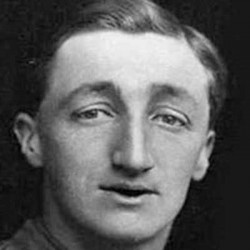
Alan Patrick Herbert was born on 24th September 1890 in Ashtead, Surrey. He was the eldest of the three sons of Patrick Herbert and Beatrice Selwyn. His father was a civil servant in the India Office, and his mother—who died when he was seven years old—came from a distinguished legal family. He was educated at Winchester College. While still at school, he had his first volume of light verse published and contributed to Punch. He read law at New College, Oxford, and gained a first-class degree in 1914. Alan enlisted with the RND after the outbreak of war and initially served as an Ordinary Seaman (Z/159) in Benbow’s A Company. On New Year’s Eve 1914, he married Gwendolyn Harriet Quilter, and he was granted a temporary commission as an RNVR Sub-Lieutenant on 10th March 1915. After arriving on the Gallipoli peninsula, Alan was diagnosed as suffering from pyrexia in late July and transferred to Mudros. He was invalided back to England onboard H.S. Caledonia and admitted to Plymouth Hospital on 18th August. After recovering, Alan was appointed to the newly formed 4th Reserve Battalion in June 1916. On 7th July, he was posted to Hawke as Bombing Officer and trained scout. Shortly afterwards, the London Gazette announced that he had been Mentioned in Despatches for his actions during the Dardanelles Campaign. |
 |
||
| When General Shute inspected the Division prior to the Battle of the Ancre, he issued a formal complaint to High Command, particularly expressing his dislike of the latrines. This prompted Alan to compose the following lines, which were to become a favoured song of the British Army for the remainder of the war: | |||
 |
|
||
| Following the battle, Alan was promoted to Adjutant and saw further action when the Division returned to the Ancre in early 1917. | |||
|
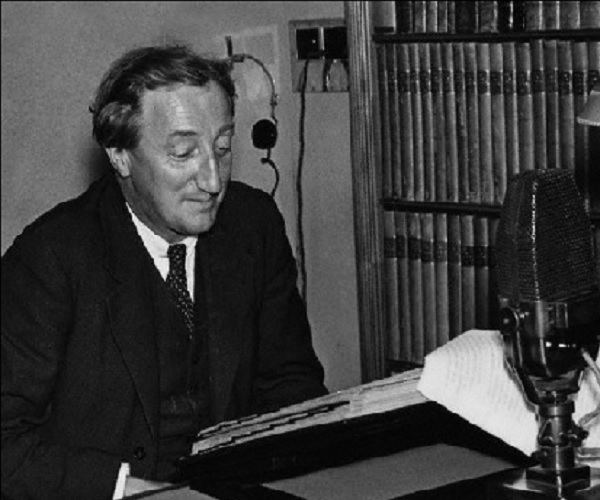
Alan and Gwendolen's first daughter Jocelyn was born in February 1917, they would later have three further children: John, Lavender, and Crystal. He was wounded at Gavrelle during the Battle of Arras, receiving a bullet to his posterior in the murderous hail of gunfire that followed the capture of the village. This wound resulted in Alan being invalided back to the UK and brought an end to his service on the Western Front. In September, he was discharged from the RND and transferred to HMS President, where he continued to serve until the end of the war. After the war, Alan joined the staff of Punch and, in 1927, had his book Misleading Cases published. He also wrote librettos and novels. He became a law reform activist and, over the years, his causes included simplifying the complex licensing laws, preventing books from being taxed, opposing aspects of a proposed betting tax, challenging the obscenity law, and resisting a proposed spelling bill. He lived in Hammersmith and, in 1935, was elected Independent Member of Parliament for Oxford University. During the Second World War, Alan re-enrolled in the Royal Navy and combined his service in patrol boats on the River Thames with his duties as an MP. He was knighted in 1945. In 1950, the university parliamentary seats were abolished, and Alan stood down. His autobiography was published in 1970, and he continued to write until his death on 11th November 1971. |
 |
||