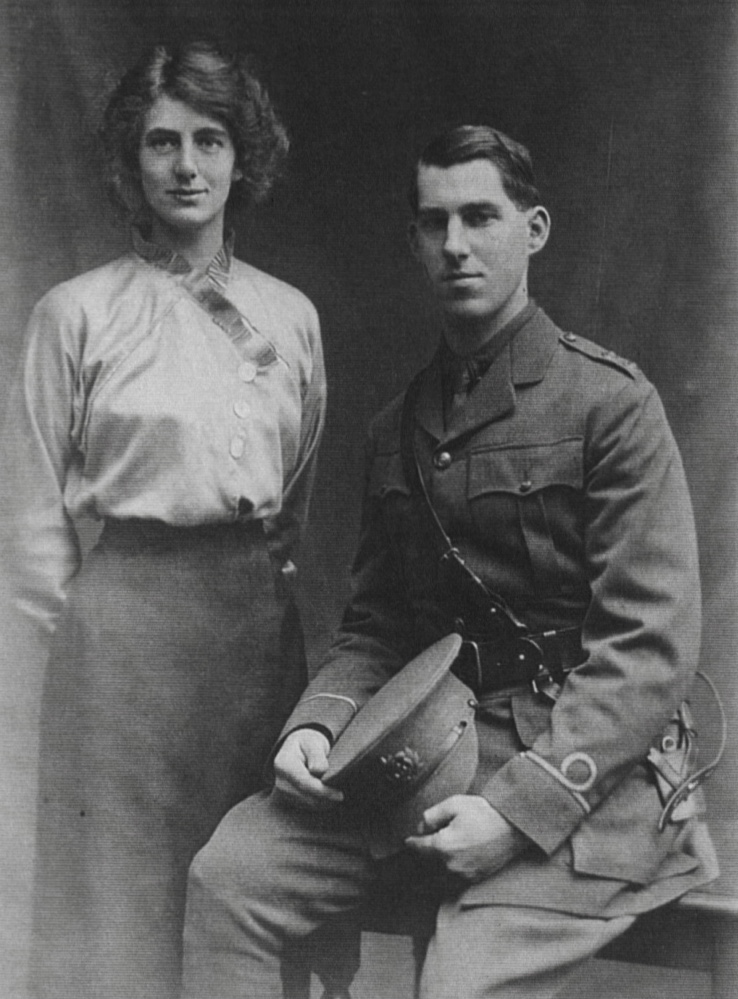
Archibald W. Buckle L10/1523
| Archibald Walter Buckle was born on 16th February 1889 in Chelsea, the eldest son of Walter John Buckle, an accountant, and Annie Emily (née Wood). He had two younger siblings: Arthur Donald (1890) and Vivian Mary (1892). | |||||
|
Aged eighteen, Archibald joined the London Division of the Royal Naval Volunteer Reserve as a rating in January 1908, receiving the service number 10/1523. At the time he was a student at Islington Training College. Training aboard HMS President, he was promoted to Petty Officer in July 1912. After completing his studies, he became a schoolmaster at St Augustine’s Boys’ School in Paddington. In the summer of 1914 he married Elsie Louisa Meeks and was on honeymoon in Scotland when war broke out; he immediately returned to London to report for duty. On 22nd August Archibald was appointed Petty Officer in the Drake Battalion. Following the battalion’s return from Antwerp, he was granted a commission as Sub-Lieutenant in December. He continued to serve at the Crystal Palace depot, where he was promoted to Temporary Lieutenant, before being transferred to the reserve battalions at Blandford. In August 1916 he briefly served as Conducting Officer for Nelson Battalion drafts, performing the same role for Hawke Battalion in September. On 14th December 1916 he joined the Nelson Battalion on the Western Front. Archibald was promoted to Temporary Lieutenant-Commander on 16th March 1917. He was wounded for the first time during the fighting at Gavrelle but remained on duty, receiving ten days’ home leave in June. On 6th July he is recorded as having accidentally sustained an abrasion to his hand after falling from a horse. Five days later he was wounded for a second time, again remaining at duty. In December 1917 Archibald was Mentioned in the G.O.C.’s Despatches as “Deserving Special Attention”, his name appearing in the London Gazette. On 19th December he was attached to the Anson Battalion as second-in-command, assuming command the following day. For his leadership at Welsh Ridge he was awarded the Distinguished Service Order. |
|
||||
  |
|||||
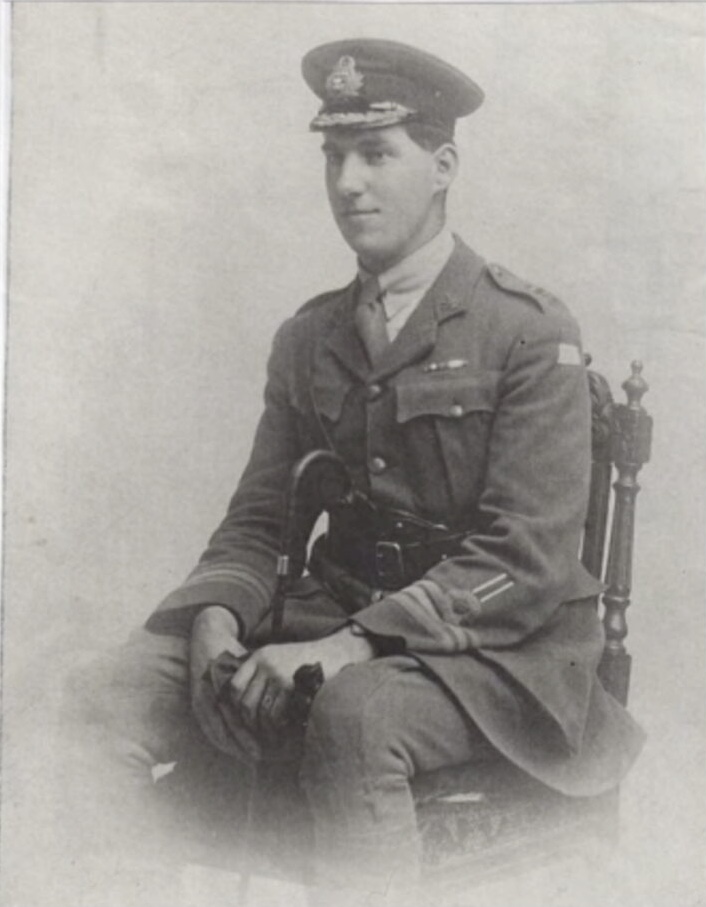 |
On 9th April Archibald was promoted to Acting Commander. In July he attended a course of instruction before being granted home leave. During the fighting at Drocourt–Quéant in September he was awarded a second bar to his DSO.  |
||||
|
Having recovered from his wounds, Archibald resumed command of the Anson Battalion on 1st January 1919. On 5th May he was gazetted as Mentioned in Despatches by the Commander-in-Chief of the British Expeditionary Force and later that month embarked at Dunkirk for England. He led the Anson Battalion during the Prince of Wales’ inspection on Horse Guards Parade on 6th June and was demobilised two days later at Crystal Palace. Following demobilisation, Archibald returned to teaching, working for two years at the London County Council School for Disadvantaged Children at Hampton Hill. He was subsequently appointed headmaster of the London Nautical School at Rotherhithe, New Road, which trained boys for careers in both the Royal Navy and the Merchant Navy. In 1927, while working on a motor car, Archibald scratched his arm above the wrist and a boil developed. Despite treatment at Westminster Hospital, the infection spread and, as contemporaries recorded, “the poison crept into his old war wounds”. He died on 6th May 1927. The coroner concluded that earlier shrapnel wounds had accelerated his death, which was attributed to bronchial pneumonia through osteomyelitis. Archibald was accorded a full military funeral and was buried in Brockley Cemetery. He left his widow, Elsie, and three sons, including Roland (b. 1920) and Lionel (b. 1924).  |
|||||
| Extracts of service record courtesy of the National Archives, ref ADM 339/3/250 | |||||