Walter Sterndale-Bennett
|
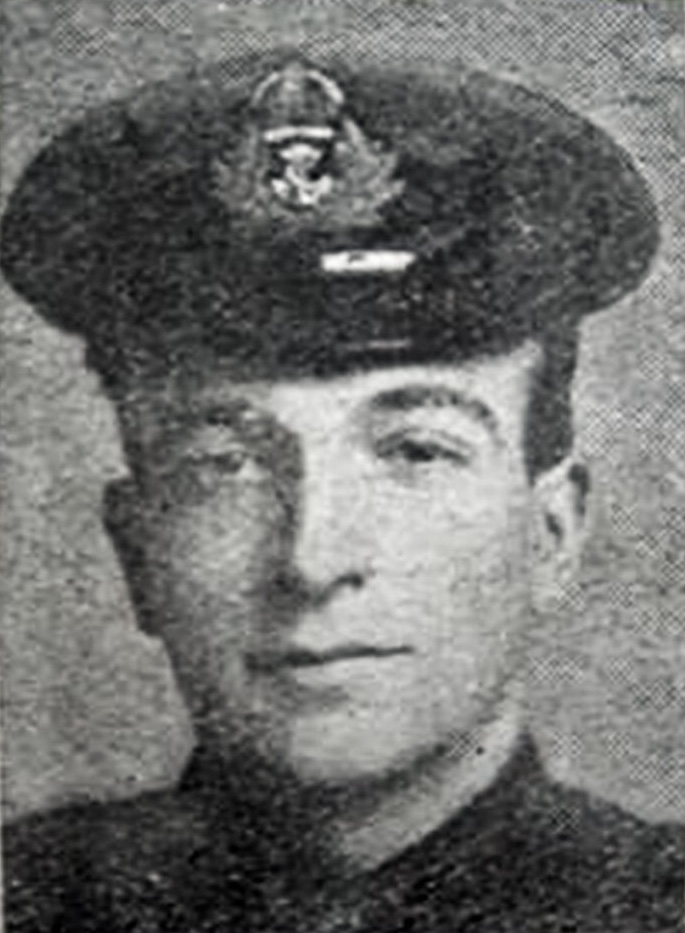
Walter Sterndale-Bennett was born on 15th July 1893 in Derby. He was the youngest of nine children born to James Robert Sterndale Bennett, a mathematician and long-serving Headmaster of Derby School, and Mabel Agnes (née Gaskell). His siblings were Esther (1877–1878), Anne (1879), John (1879), Robert (1880), Thomas Case (1882), Ernest Gaskell (1884), William (1888), and James Barry (1889). After leaving school, Walter entered the Worcester Nautical Training College in 1910, afterwards going to sea as an apprentice. In 1913 he joined the crew of Star of India as fourth officer and shortly afterwards gained his 2nd Mate’s certificate. He soon decided, however, that a life at sea was not for him and left the Merchant Service with the intention of becoming an artist. |
|||||
|
Following the outbreak of war, Walter enlisted in the Artists Rifles as a private on 19th November 1914. On 24th February 1915 he was granted a Royal Naval Volunteer Reserve commission as a Sub-Lieutenant and began training with the Drake Battalion at Crystal Palace. Walter embarked for Gallipoli in August 1915 and was appointed Adjutant of Drake Battalion on 16th September. He was Mentioned in Despatches for distinguished and gallant services while serving on the peninsula. In March 1916 he was promoted to the rank of Lieutenant. It was on the Ancre that Walter proved himself an officer of the highest calibre. During the fighting all the senior officers of the battalion became casualties, and he personally took command under heavy fire. For his actions he was awarded the Distinguished Service Order. |
 |
||||
 On the following day, the 14th, Walter was left in temporary command of the Drake Battalion and promoted to Lieutenant-Commander. After the action he was sent back to England to attend a senior officers’ course. |
|||||
 |
Walter rejoined the Division in early April 1917 and was placed in command of Drake with the rank of Temporary Commander. He was the youngest officer commanding a battalion in France. That same month he was also Mentioned in Despatches by Sir Douglas Haig. At Gavrelle he was awarded a Bar to his DSO:
Walter proved to be an exceptional officer, held in the highest regard by those who served under him, and he further enhanced the already formidable reputation of the Drake Battalion. He demonstrated outstanding judgement and leadership in command, combined with genuine respect for the men he led. When welcoming new drafts to the battalion on their arrival in France, he told them: “In this Battalion we don’t drive you, we lead you. All we ask you to do is follow.” On 4th November 1917 Walter’s service record notes that he was dangerously wounded. While visiting the Division’s positions in front of Tournant Farm, the Germans laid down a heavy barrage. A shell severed one leg below the knee and shattered the other foot. His condition rapidly deteriorated, and he died of his wounds three days later. |
||||
Walter Sterndale-Bennett is buried in Dozinghem Military Cemetery. He was Mentioned in Despatches for the final time, printed in the London Gazette on 11th December.  Walter's original grave marker |
|||||