William Ker
|
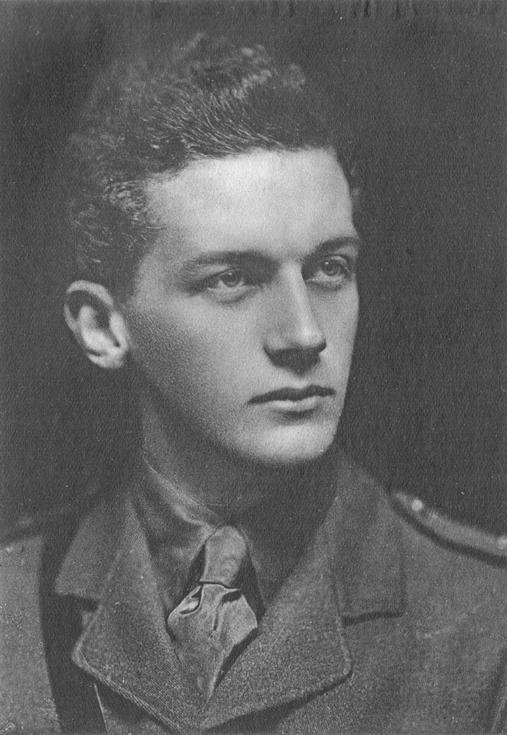
William Ker was born on 14th October 1892 in Glasgow, the third of six children of Charles Ker, a partner in a prominent firm of chartered accountants, and his wife Florence (née Higginbotham). He was educated at Edinburgh’s Cargilfield School before proceeding to Rugby School, where he distinguished himself as a gifted all-round sportsman, excelling in both football and cross-country running. As an undergraduate at Balliol College, Oxford, where he was training to follow his father into the accounting profession, William formed a close and enduring friendship with Alan Patrick Herbert. At Oxford he took up hockey, playing for the University’s first XI, and in 1914 he represented Scotland against both England and Ireland. Despite these considerable athletic achievements, his academic performance was less assured, and he graduated with a third-class degree in Classics. At the outbreak of war William initially served with the Motor Boat Reserve, before transferring to the Royal Naval Division in January 1915. He was appointed Sub-Lieutenant and attached to Hawke Battalion, with which he was posted to Gallipoli in May. In September he was sent to Alexandria on temporary duty, returning to the Peninsula the following month. In November he assumed command of Hawke Battalion’s ‘A’ Company and was promoted Temporary Lieutenant, a rank he retained even after relinquishing that command. Following the evacuation of Gallipoli, William was granted leave to the United Kingdom and rejoined his battalion when the Division moved to France in May 1916. He served with Hawke Battalion at Bully-Grenay before taking part in the Battle of the Ancre. He was killed in action during the fighting in November, the precise circumstances of his death remaining unclear. It appears most likely that he was among those cut down by the devastating fire from the German redoubt which inflicted such severe losses on Hawke Battalion. He has no known grave and is commemorated on the Thiepval Memorial. |
 |
|||||||
In The Hawke Battalion, Douglas Jerrold wrote of him:
When the Division returned to the Ancre in 1917, Herbert composed the poem Beaucourt Revisited in memory of those who had fallen there the previous November, and in its penultimate verse paid quiet tribute to his close friend. |
||||||||
 |
|
|||||||
| ||||||||